Every few months a buyer asks us the same question: is demand for nasal strips and mouth tape still growing, or has the category peaked? We would rather answer it with public data than with our own order book, because our order book only shows the brands that already found us.
So we read the latest sleep trend report from Rising Trends, which ranks consumer search demand across the sleep category. Its figures are monthly search volumes as of September 2026, and the report was updated on 26 October 2026. We pulled out the numbers that bear on our own product line, checked them against what we see in the plant, and set out below what we think they mean for anyone building or extending a range.
One thing first, because it governs how the rest should be read: these are search volumes, not clinical results. The report says so itself. Search interest tells you what people are curious about. It does not tell you what works.
The Smallest Category Is Growing Fastest
The report splits the sleep economy into seven categories. Breathing and airway solutions, the group that contains nasal strips, nasal dilators and mouth tape, carries the highest growth rate in that table at roughly 12.4% compound annual growth. Sleep tech and wearables sit at about 11.2%, smart mattresses and bedding at 6.8%.
Read that alongside the base. The same table puts breathing and airway at around $1.5B, the smallest of the seven, against roughly $45B for smart mattresses. A high rate on a small base describes a category that is still forming, not one that is already large. For a buyer, that is the more useful reading: the shelf in this segment is not locked up yet.
We would add a caveat the report does not. Its category sizes are the only figures on that page with no stated methodology, no source and no measurement basis, while the search volumes are at least dated and defined. Treat the growth rates as directional and the search numbers as the firmer evidence.
Two Products, One Shelf, Very Different Search Volume
The product-level numbers are where it gets specific:
- Mouth taping: 60,500 monthly searches, flat year over year, up 22% over the last three months
- Nasal breathing strips: 27,100 monthly searches, up 22% year over year and 50% over three months
- Nasal dilator: 12,100 monthly searches, up 22% year over year
The first line is the interesting one. Mouth taping is searched more than twice as often as nasal breathing strips, 60,500 against 27,100, even though both products are bought by the same person for the same reason and are often made in the same plant.
We do not read that as nasal strips losing ground. The strip is the older, better-established product and its volume is still rising 22% a year. What the gap shows is where new buyers are entering: through the mouth-tape story, which travelled by short video and sleep-wellness content rather than through clinical literature. The vocabulary pulling people into the category is the mouth-tape vocabulary.
That has a practical consequence for anyone naming products, writing listings or briefing a designer. The product that wins the search is not always the product that starts the conversation.
What This Means If You Are Building a Range
Three decisions follow from the data, and they are the three buyers ask us about most.
1. Lead With Mouth Tape, Support With Strips
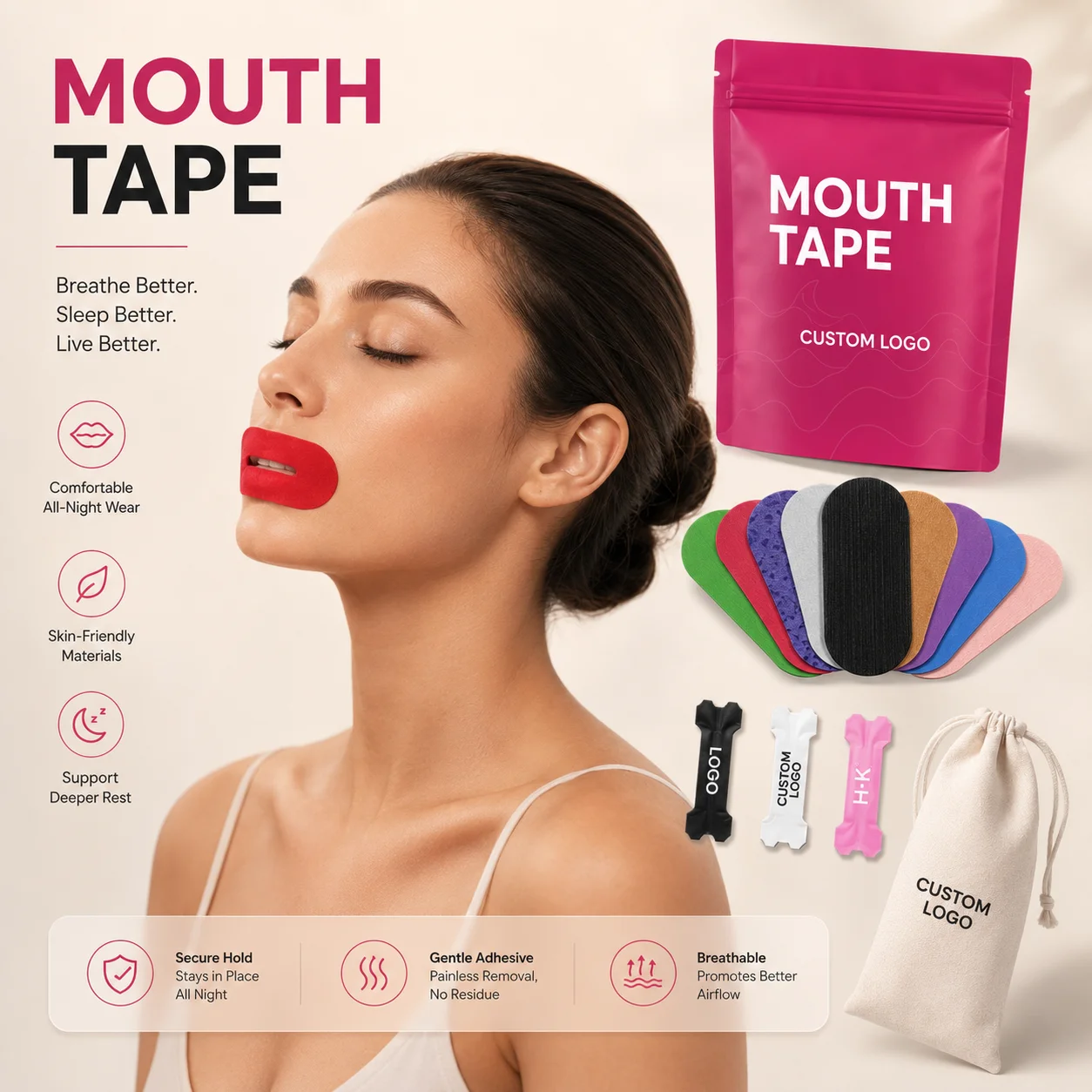
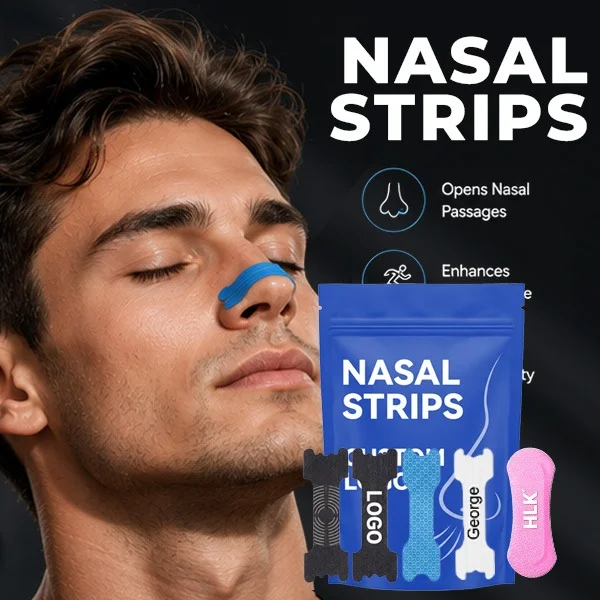
If you are entering the category, mouth tape is the product that already has consumer language behind it. The nasal strip then works as the second SKU: it shares the shelf, shares the buyer, and costs less to explain because the mechanism is visible on the nose. Brands that launch both together fill the range faster than brands that launch one and wait for data.
2. Plan the Line, Not the Product
A range that sells needs variation a buyer can see in a photograph: breathable cotton versus PE film for mouth tape, tan versus transparent for strips, different adhesive strengths for different skin types, and packaging that reads as one family rather than four unrelated products. This part is manufacturing rather than marketing, and it is where a supplier either helps or gets in the way.
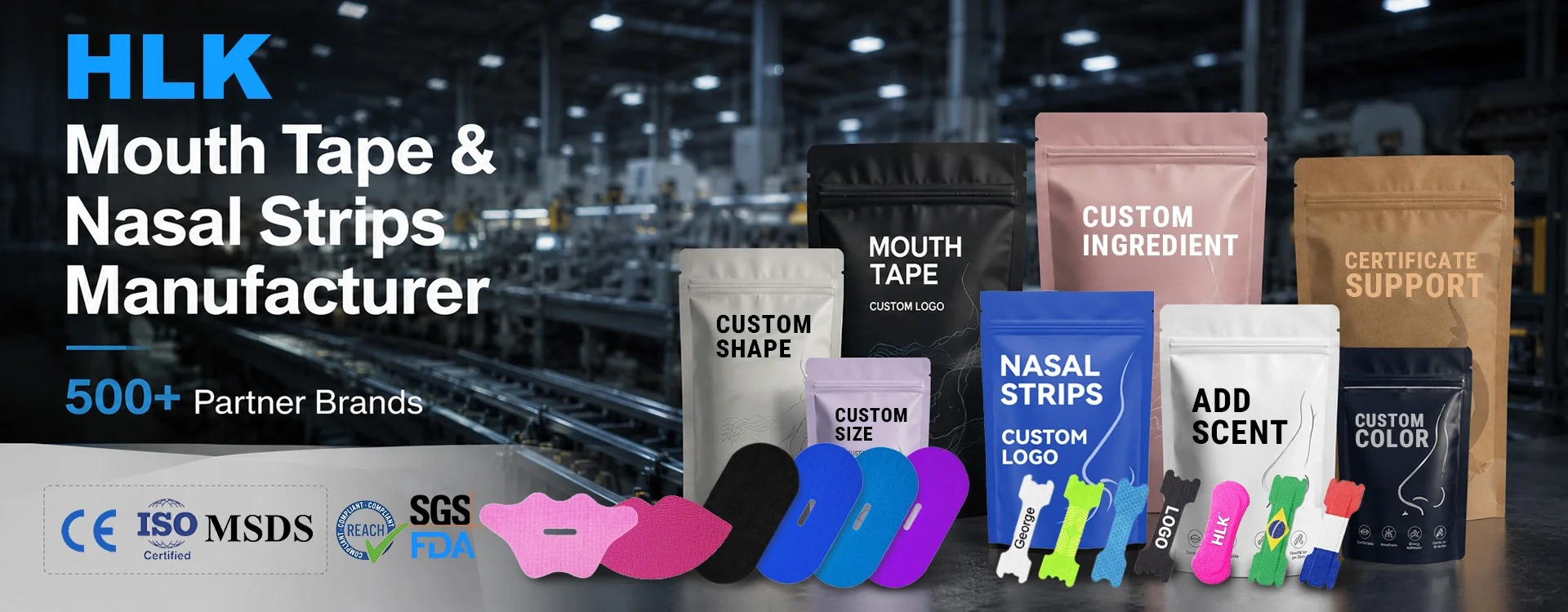
HLK has made adhesive tape and patches since 1993, on several automated coating and converting lines. Our nasal strip and mouth tape lines, together with facial tape and aroma strips, run as one programme rather than as separate jobs. A brand can therefore order a coordinated set, same adhesive system, same packaging format, one round of artwork approval, instead of assembling it from three suppliers.
3. Get the Paperwork Before the Artwork
The question that stops more launches than any other is documentation. Marketplaces and EU importers ask for evidence before they ask for a price, and a range that cannot produce it does not ship.
What we hold and can put in front of a buyer: ISO 13485 for our quality management system, ISO 9001 for the plant, and ISO 10993 biocompatibility testing on the skin-contact materials we run, covering cytotoxicity (10993-5), sensitisation (10993-10) and skin irritation (10993-23). Test reports and certificates are listed on our product documents page and can be sent with a quotation.
Where the Line Sits: These Are Not Sleep Apnea Treatments
One passage in the report deserves more attention than it got. Writing about breathing aids, the authors note that mouth tape, nasal strips and nasal dilators are all marketed for nasal breathing, and that none of them is a treatment for sleep apnea.
We agree, and we would put it more strongly. Searches for sleep apnea testing spiked this year and have flattened since, which suggests more people are looking for a diagnosis, and a diagnosis is a clinician's job rather than a product's. A tape that helps someone keep the mouth closed at night is a comfort product. It is not a screening tool and not a therapy.
For a brand this is a labelling decision before it is a marketing one. Claims such as “stops snoring”, “cures sleep apnea” or “clinically proven” need clinical evidence behind them, and most of this category does not have it. Positioning around nasal breathing, comfort and a bedtime routine is where these products honestly sit.
We would rather lose a listing than print a claim the documents cannot carry. That is also why our own product pages describe what the tape does and leave the medical language out.
What We Are Watching Next
Two things. First, how people describe the problem is changing. Searches for side sleeper rose more than elevenfold on the year, and position-first phrasing is now how buyers shop the whole sleep aisle. Copy that opens with the situation, for side sleepers, for mouth breathers, for travel, is meeting that behaviour; copy that opens with material and thickness is not.
Second, the seasonal curve. Warmth and comfort products climb into the fourth quarter every year, and a buyer placing a private-label order in November is already late for the winter shelf. The useful window in this category is the one before the demand, not the one during it.
Sources
Search volumes and category figures: Rising Trends, Top 46 Sleep Trends (October 2026), updated 26 October 2026, search volumes as of September 2026, accessed 30 October 2026. Figures are quoted as published. The category sizes carry no stated methodology, as noted above.
Related reading on this site: Why mouth taping is becoming a popular sleep wellness trend, Why sleep tape is a growing opportunity in the cross-border market, and Are nasal strips suitable for the cross-border e-commerce market?.
One-Stop Custom Tape & Patch Supplier, Fully Certified & Safety Guaranteed
Call/Text: +86-19805957675 Email: [email protected] Website:https://www.hlktape.com YouTube:https://www.youtube.com/@HLKTape